Intact estimates about $660 million of pre-tax catastrophe losses for July to September and Definity about $190 million, driven by the June 30 to July 3 Ontario and Quebec floods, British Columbia wildfires and a September storm; both report full results in the coming weeks.
Two of Canada's biggest property and casualty insurers have given an early look at how costly the summer was. In releases reported on October 7, 2026, Intact Financial and Definity Financial estimated their catastrophe losses for the third quarter, the months of July, August and September. Intact put its figure at about $660 million before tax and net of reinsurance, and Definity at about $190 million, a combined total of roughly $850 million. All figures are in Canadian dollars. This article draws on Insurance Business Canada, which carried the combined figure and the breakdowns, and on Reinsurance News, which carried a similar story. We have not seen the companies' own releases, so the numbers below are as reported and are estimates, not final results.
Start with Intact. According to the report, the $660 million equals $2.76 per diluted share after tax. By region, $615 million arose in Canada, $38 million in the United Kingdom and Ireland, and $7 million in the United States, which sums to $660 million. The report also breaks the losses down by line: personal property $390 million, commercial lines $173 million and personal auto $52 million. Those three lines add up to $615 million, the same as the Canadian figure, so we read the line split as relating to Canada only. That is our inference. The report does not say so explicitly, and the difference between the lines and the total may be a source of confusion for readers who add the numbers.
Definity's figure is smaller because the company is smaller. It reported about $190 million as a reduction in third-quarter underwriting income, net of reinsurance recoveries, or $1.15 per common share. That updates a preliminary estimate it issued on September 3, which covered only July and August, so the extra storm damage in September is now included. By line, personal property was $136 million, about 72% of the total, commercial insurance $37 million and personal auto $17 million. For both companies the biggest share is home insurance, which is the line most exposed to water damage from floods and sewer backup and to wildfire.
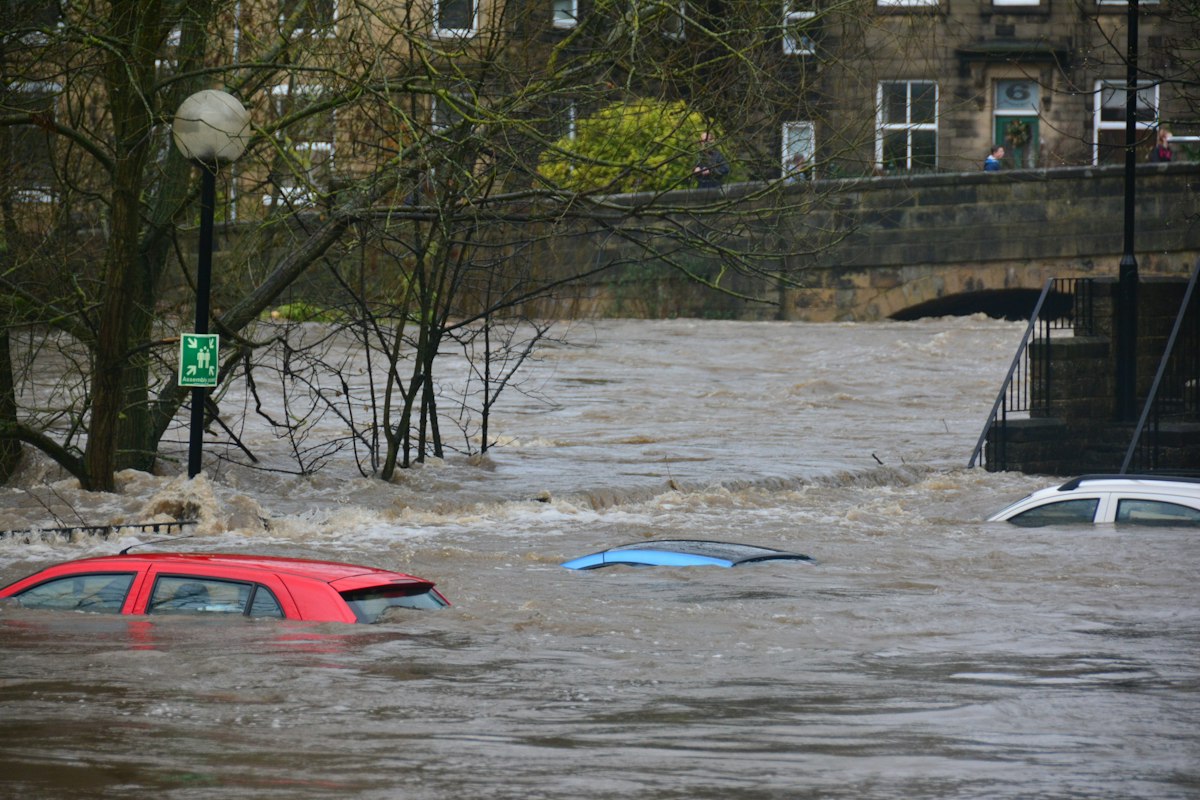
What caused the losses? The companies cite a run of events instead of one disaster. The first was a series of storms from June 30 to July 3 across southern Ontario and southern Quebec, which caused flooding, much of it in basements in Ottawa. The industry's catastrophe tracker, CatIQ, estimates insured losses from that event at $491 million. The second was the wildfire season in British Columbia, including the Bald Range fire near Summerland, which CatIQ puts at $293 million of insured losses. There was also summer rainfall flooding in Ontario and Alberta, and early in September a storm system that brought damaging wind, hail and flooding to southern Ontario, which Definity highlighted. Note that CatIQ figures cover the whole industry, not a single insurer, and that some of the June 30 event falls in the second quarter, so the two sets of numbers cannot simply be compared with the companies' quarterly estimates.
The numbers matter most against the yearly picture. According to the report, Intact's chief financial officer, Ken Anderson, said catastrophe losses over the trailing 12 months were $1.29 billion, above the company's annual guidance of $1.20 billion. The report also says industry-wide insured catastrophe losses in Canada were about $2.4 billion in 2025, so the same summer events could push the 2026 figure higher still, although the sources do not provide an industry estimate for this year. Intact's second-quarter results, reported at the end of July, showed profit of $720 million compared with $867 million a year earlier, according to BNN Bloomberg's headline. We did not review the details of that report and mention it only as context.
What did management say? Intact's chief executive, Charles Brindamour, was quoted as saying, 'At an industry level, these events reinforce firm market conditions.' In plain terms, he expects insurance prices to stay firm. Definity's president and chief executive, Rowan Saunders, said severe weather continued into September and affected communities across the country, a paraphrase in the report. These statements are the companies' own views and should be read as such.
For policyholders, the practical effect is likely to come through renewal pricing and terms rather than through any change in claims handling. 'Firm market conditions' means that insurers are not discounting to win business. Homeowners in flood-prone areas may see higher premiums, higher deductibles for water damage or limits on overland-flood cover, but the reports reviewed do not give rate figures, so we cannot say by how much. Anyone with a policy should check whether they have overland flood and sewer backup cover, since many standard home policies treat these as optional extras. Claims from the summer's events are still being settled, and the final cost may change as adjusters finish their work.
For investors, the key question is whether pricing and reinsurance can absorb a year of losses above plan. Both insurers buy reinsurance, which is why the headline figures are stated net of recoveries. The estimates will be replaced by audited results, which both companies say will come in the coming weeks, although the reports give no date. Readers should check the companies' investor pages for the release dates, the combined ratios and any change to guidance. This article is a news summary, not investment or insurance advice.
Key Points
- 1Intact estimates third-quarter catastrophe losses of about $660 million pre-tax, net of reinsurance, or $2.76 per diluted share after tax; Definity puts its hit at about $190 million, or $1.15 per common share. Together that is about $850 million.
- 2Of Intact's $660 million, $615 million was in Canada, $38 million in the UK and Ireland and $7 million in the US; the reported split by line (personal property $390 million, commercial $173 million, personal auto $52 million) adds up to the $615 million Canadian figure.
- 3The main events were the June 30 to July 3 storms in southern Ontario and Quebec (CatIQ: $491 million of insured losses), the Bald Range wildfire in British Columbia ($293 million) and further summer floods in Ontario and Alberta.
- 4Intact's trailing 12-month catastrophe losses are $1.29 billion, above its $1.20 billion annual guidance, according to its chief financial officer; CEO Charles Brindamour said the events 'reinforce firm market conditions'.
- 5Both companies report full third-quarter results 'in the coming weeks'; the reports reviewed give no dates, and the figures are preliminary estimates.
Why This Matters
Canadian home insurers are paying out for floods and fires on a scale that was once rare. Preliminary loss estimates are an early guide to how much pressure there is on home insurance prices, and to whether insurers can still earn a return in a bad weather year.
Original Source
Insurance Business Canada and Reinsurance News (citing Intact and Definity releases and CatIQ) ↗Related Stories

Progressive's Third Quarter: Profit Slips 3% to $2.54 Billion Even as Policies in Force Rise 6% to 40.5 Million
October 17, 2026

Marsh Warns That Broad AI Exclusions in Insurance Policies Could Create 'Real Confusion and Uncertainty'
October 17, 2026

Swiss Re: Non-Economic Factors Drive About Half of UK Liability Claims Growth, and Litigation Funding Reform Could Add More
October 17, 2026

Hackers Push Fridges to 50°C at About 350 French Supermarkets, and Insurers Say Standard Cyber Cover Is Unlikely to Pay for Spoiled Food
October 17, 2026
Daily Intelligence
The PolicyRix Daily Brief
Get the day's key insurance and finance stories in one email, each linked to its original source. No spam. Unsubscribe anytime.
Informational newsletter only. Not financial advice. Disclaimer