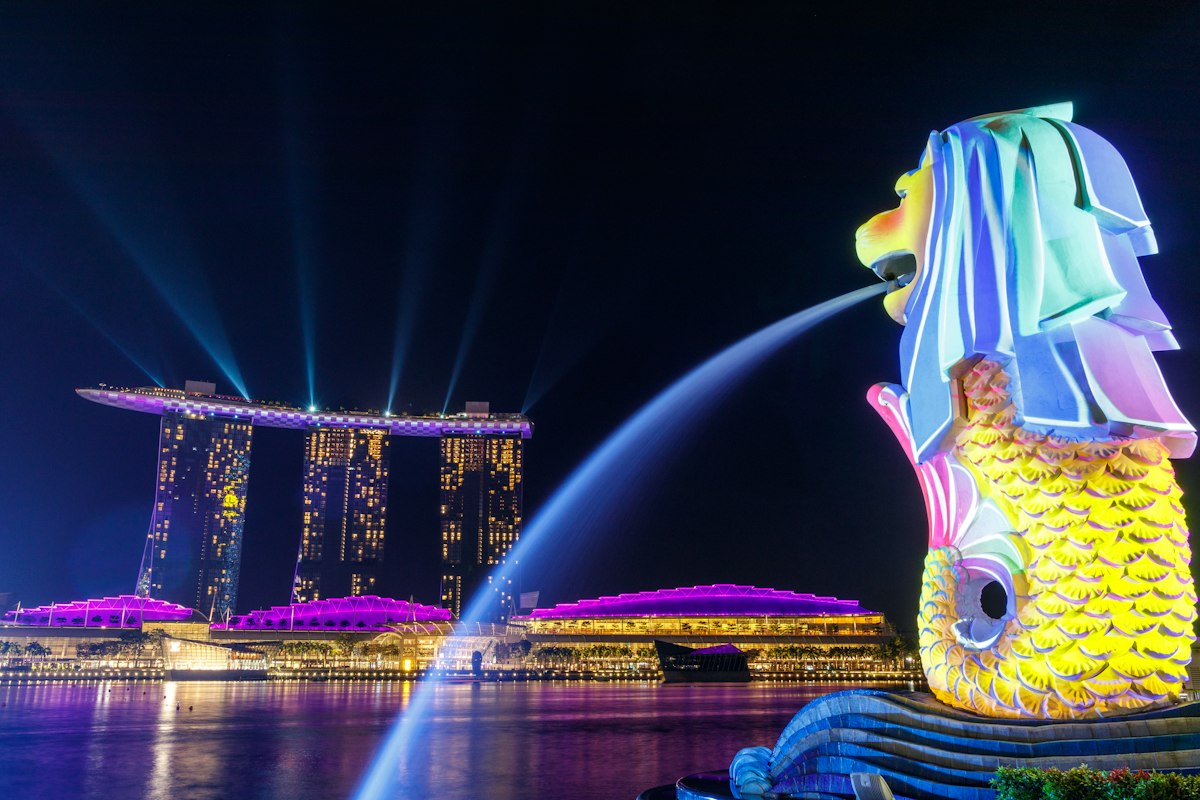
At the Singapore FinTech Festival in November 2025, MAS Managing Director Chia Der Jiun said the regulator would trial tokenised MAS bills settled in wholesale CBDC in 2026 and would draft stablecoin legislation, after DBS, OCBC and UOB completed overnight interbank lending using the digital Singapore dollar.
Singapore's central bank has set out how it wants tokenised finance to move from experiments to everyday use. In a speech at the Singapore FinTech Festival on November 13, 2025, Monetary Authority of Singapore (MAS) Managing Director Chia Der Jiun announced a trial to issue tokenised MAS bills, settled with a central bank digital currency, and said the regulator was ready to draft stablecoin legislation. The facts below come from The Block's report and Central Banking's report of the speech, both dated November 13, 2025. We have not reviewed the speech itself, and parts of the Central Banking article were behind a paywall. The reports say details of the trial were due in 2026; we did not find an update on its status for this article, so readers should check MAS's website for the current position.
Start with the trial. MAS plans to issue tokenised MAS bills to primary dealers, the banks and securities firms that buy government paper directly. MAS bills are short-term debt that the central bank issues to manage liquidity. 'Tokenised' means the bill is represented as a digital token on a shared ledger instead of as an entry in a conventional register. The bills would be settled using the Singapore dollar wholesale central bank digital currency (CBDC), which is a digital form of central bank money available to financial institutions, not to the public. According to Central Banking, issuance is expected 'sometime in 2026'. The Block says details are due next year and gives no further trial specifics such as the number of participants, volumes or exact dates.
The second element is a milestone already completed. The Block reports that DBS, OCBC and UOB conducted interbank overnight lending transactions using the Singapore dollar wholesale CBDC in a trial, and Central Banking describes this as the first CBDC interbank overnight lending settlement by Singaporean banks. MAS says the testing supports its aim of scaling tokenised finance using safe settlement assets. The reasoning is that a tokenised asset is only as safe as the money used to pay for it: if bills settle in central bank money, then the payment carries no credit risk to a private issuer.
What did Chia say about the technology? The Block quotes him on whether asset-backed tokens are clearly out of the lab: 'Without a doubt.' He then asked whether they have achieved 'escape velocity', and answered, 'Not yet.' In other words, tokenisation is already used in commercial settings but has not reached the scale where it changes markets. The promised benefits, according to the report, are round-the-clock settlement, fewer intermediaries and more efficient use of collateral, but structural hurdles remain before large-scale adoption. The report does not list what those hurdles are, so we do not speculate.
The third element is stablecoins. MAS has finalised its stablecoin regulatory regime and will prepare draft legislation, according to The Block. Stablecoins are crypto tokens designed to hold a steady value, usually by being backed by reserve assets. They are classed as 'digital payment tokens' under Singapore's Payment Services Act. MAS introduced a framework in August 2023 covering single-currency stablecoins pegged to the Singapore dollar or to a major currency such as the US dollar or the euro. Chia said, 'Under our regime, we have given importance to sound reserve backing and redemption reliability.' He also warned that unregulated stablecoins have a 'patchy record' of maintaining their pegs and could trigger systemic runs, comparing the risk to the 2008 episode when some money market funds 'broke the buck', meaning their value fell below the amount investors put in. This is the regulator's view of the risk and the argument for rules that insist on reserves and the ability to redeem.
There is one further initiative. The Block says MAS launched BLOOM, which supports experimentation with tokenised bank liabilities and regulated stablecoins for settlement. The report gives no more detail. Other MAS digital-finance measures, such as guidance on AI risk management, are outside the speech reports reviewed here, so we do not cover them.
Why should insurers and ordinary savers care? Insurers and asset managers are large buyers of government and central bank securities and use them to back policies and manage liquidity. If settlement becomes faster and available around the clock, collateral and cash can be moved more efficiently. If stablecoin rules are written into law, firms that issue or use them will have clearer obligations. But nothing in the reports suggests any change for retail customers in the near term. Wholesale CBDC is for institutions, and the stablecoin legislation was still to be drafted at the time of the speech.
What should readers watch? First, whether MAS has published the trial details for tokenised bills and whether issuance took place in 2026 as planned. Second, when the draft stablecoin legislation is released for consultation. Third, whether more banks join the wholesale CBDC trials beyond DBS, OCBC and UOB. This article summarises reports of a speech and is not financial, legal or investment advice.
Key Points
- 1On November 13, 2025, MAS Managing Director Chia Der Jiun said MAS plans to trial issuing tokenised MAS bills to primary dealers, settled with Singapore dollar wholesale CBDC, with issuance expected sometime in 2026.
- 2DBS, OCBC and UOB completed interbank overnight lending transactions using the wholesale CBDC in a trial, which MAS says supports scaling tokenised finance on safe settlement assets.
- 3MAS has finalised its stablecoin regime and will prepare draft legislation; stablecoins are classed as digital payment tokens under the Payment Services Act, and a framework for single-currency stablecoins was introduced in August 2023.
- 4Chia said asset-backed tokens are 'without a doubt' out of the lab but have 'not yet' achieved escape velocity, citing structural hurdles to large-scale adoption.
- 5MAS also launched an initiative called BLOOM to support experimentation with tokenised bank liabilities and regulated stablecoins for settlement; the reports reviewed give no update on the 2026 trial itself.
Why This Matters
Settlement is the plumbing of finance, and a digital form of central bank money could make it faster and available around the clock. How MAS tests tokenised government bills and regulates stablecoins will shape how banks, insurers and asset managers in Singapore use digital assets.
Original Source
The Block and Central Banking (reporting MAS Managing Director Chia Der Jiun's speech, November 13, 2025) ↗Related Stories

GTCR and Elliott Agree to Buy CCC Intelligent Solutions, the Claims and Repair Software Network, for $6.1 Billion
October 18, 2026
MAS Proposes That Insurer and Bank Nominating Committee Chairs Need Its Approval, With Stricter Board Independence Rules, Consultation Open Until December 9
October 18, 2026

MAS Holds Its Singapore Dollar Policy Band Steady in October After Two Tightening Moves This Year
October 14, 2026

Singapore's MAS Consults on a Protected Cell Company Framework to Grow Captives and Insurance-Linked Securities
August 6, 2026
Daily Intelligence
The PolicyRix Daily Brief
Get the day's key insurance and finance stories in one email, each linked to its original source. No spam. Unsubscribe anytime.
Informational newsletter only. Not financial advice. Disclaimer