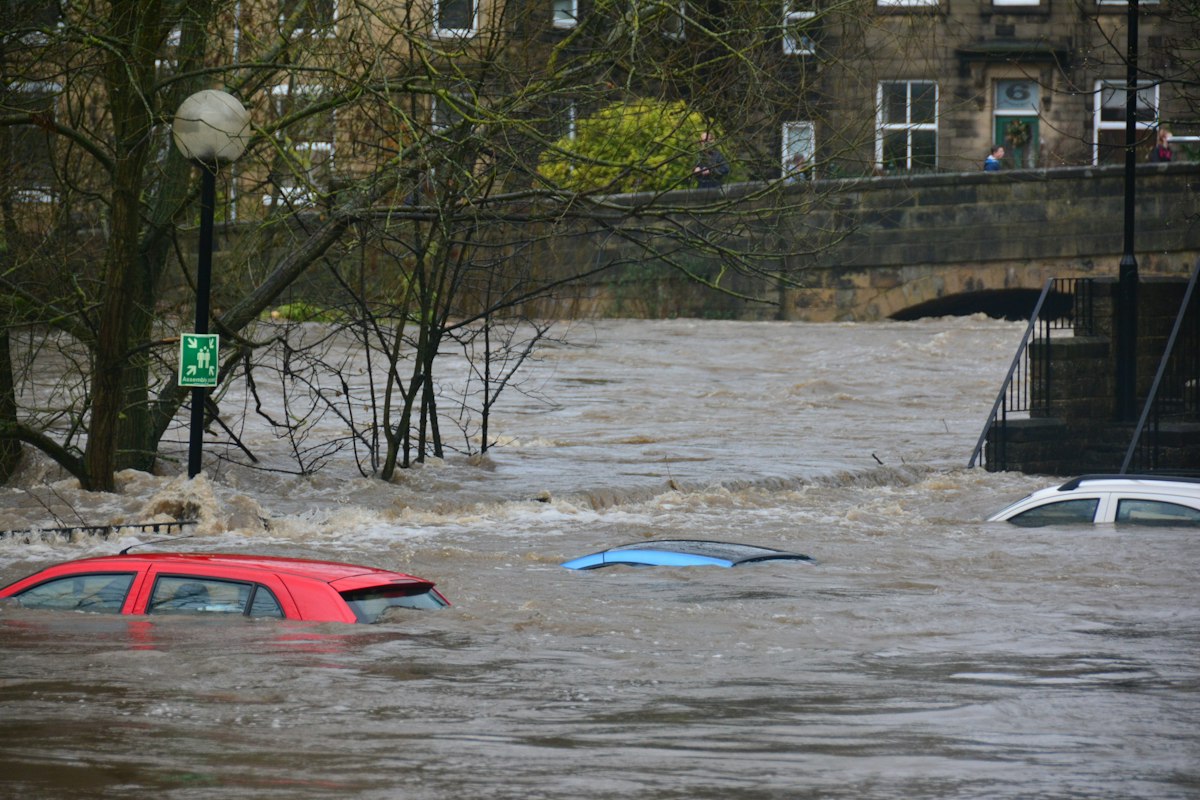
Intact Financial estimated third-quarter 2026 catastrophe losses of about C$660 million ($2.76 per diluted share) and Definity about C$190 million ($1.15 per share), together roughly C$850 million, driven by Ontario and Alberta flooding and British Columbia wildfires, lifting Intact's trailing 12-month losses to C$1.29 billion against C$1.20 billion of annual guidance.
Canada's two largest listed property and casualty insurers have given early warning that the summer's weather was costly. In separate announcements reported by Insurance Business on October 7, 2026 and Reinsurance News the following day, Intact Financial Corporation and Definity Financial Corporation estimated their third-quarter catastrophe losses at about C$850 million combined, net of reinsurance. The figures are estimates released ahead of the full quarterly results, which both companies are due to report in the coming weeks. The Intact announcement also appeared on insurance-canada.ca on October 23.
Intact's estimate is the larger. The company said third-quarter catastrophe losses were approximately C$660 million before tax, net of reinsurance, equal to $2.76 per diluted share after tax. Its release breaks the total down by geography: C$615 million in Canada, C$38 million in the UK and Ireland, and C$7 million in the United States. By line, personal property accounted for C$390 million, commercial lines C$173 million and personal auto C$52 million. Reinsurance News lists the three line items as summing to C$615 million, which matches the Canadian figure and not the C$660 million group total, because the UK and US losses are in addition. The company attributed the losses to severe storms causing flooding, water and wind damage across several regions, and to wildfires in British Columbia.
The estimate has an effect on Intact's full-year position. Its chief financial officer, Ken Anderson, said catastrophe losses for the trailing 12 months were C$1.29 billion, modestly above the company's annual guidance of C$1.20 billion. Management described 2025 and early 2026 as benign and noted that the third quarter is historically an active period for weather events. Chief executive Charles Brindamour said: "At an industry level, these events reinforce firm market conditions."
Definity's estimate is smaller but significant for a company of its size. It said catastrophe losses had an impact of approximately C$190 million on third-quarter underwriting income, net of reinsurance recoveries, equal to $1.15 per common share after tax and reinsurance. Personal property made up C$136 million, about 72% of the total, with C$37 million in commercial insurance and C$17 million in personal auto. Insurance Business describes the figure as an update to a preliminary estimate Definity issued on September 3 covering July and August, though the article does not give the earlier figure. Definity's president and chief executive, Rowan Saunders, said severe weather-related events over the summer continued into September and affected communities across the country.
The events behind the numbers are specific. Definity cited July and August severe rainstorms that caused flooding in Ontario and Alberta, wildfires in British Columbia and an early-September storm system that brought damaging winds, hail and flooding to southern Ontario. Insurance Business adds industry estimates from CatIQ, which tracks Canadian insured catastrophe losses: the June 30 to July 3 storms in southern Ontario and southern Quebec were estimated at C$491 million, much of it from basement flooding in Ottawa, and the Bald Range Fire near Summerland, British Columbia, at C$293 million. For comparison, industry-wide insured catastrophe losses were about C$2.4 billion in 2025, a quieter year, according to the article.
Two points stand out. First, water is driving claims at both carriers, and personal property is the largest line in each. Second, the loss figures are net of reinsurance, so they show what the insurers themselves bear after their reinsurance recoveries, and not the gross cost of the events to the industry. Neither announcement gave a combined ratio impact. Reinsurance News notes that the articles contain no prior-year comparison for either company, and Insurance Business reports no second-quarter catastrophe figures for either.
The implications for customers are mostly about pricing and terms. Insurance Business notes that some brokers had expected personal property pricing to ease, and that a quarter that pushed Intact above its catastrophe guidance makes that less likely, especially for flood-exposed urban homeowners. It also expects more focus on sewer backup and overland flood endorsements, deductibles and mitigation, especially in southwest Ottawa and parts of Alberta. That is the publication's assessment, not a statement from either insurer.
It helps to know what the headline figure means. An insurer's catastrophe loss estimate covers claims from events that the industry classes as catastrophes, and it is quoted after the insurer's reinsurance recoveries, so it shows the amount that hits the insurer's own results. It is also quoted before the full quarter's other items, such as ordinary claims, expenses and investment income, which is why a catastrophe estimate on its own does not tell shareholders what profit will be. The per-share figures, $2.76 for Intact and $1.15 for Definity, translate the after-tax effect into terms comparable with earnings per share, which is how analysts will adjust their forecasts. Readers should treat all of these as estimates. The full third-quarter reports will confirm the catastrophe figures, show how much of the loss was offset by reinsurance and give the combined ratios. Marsh's index for the third quarter, published October 21, recorded Canadian composite commercial rates down 6% on average, so the personal property pressure described here sits against a softer commercial market.
Key Points
- 1Intact Financial estimated third-quarter 2026 catastrophe losses of about C$660 million pre-tax, net of reinsurance, or $2.76 per diluted share after tax: C$615 million in Canada, C$38 million in the UK and Ireland and C$7 million in the US.
- 2By line, Intact's losses were C$390 million personal property, C$173 million commercial lines and C$52 million personal auto; Intact's trailing 12-month catastrophe losses were C$1.29 billion, modestly above annual guidance of C$1.20 billion.
- 3Definity Financial put the third-quarter impact on underwriting income at about C$190 million net of reinsurance recoveries, or $1.15 per common share: C$136 million personal property, C$37 million commercial and C$17 million personal auto.
- 4Events cited include July and August rainstorms and flooding in Ontario and Alberta, wildfires in British Columbia and an early-September storm bringing wind, hail and flooding to southern Ontario; CatIQ put the June 30 to July 3 southern Ontario and Quebec storms at C$491 million and the Bald Range Fire near Summerland at C$293 million.
- 5Intact chief executive Charles Brindamour said the events 'reinforce firm market conditions' at an industry level; industry insured catastrophe losses were about C$2.4 billion in 2025, a quieter year.
Why This Matters
Water damage from heavy rain and flooding is now a larger part of Canadian home insurance claims, and these estimates show how quickly a few storms can use up an insurer's annual allowance. For homeowners in flood-exposed cities such as Ottawa, the practical effects are on pricing and policy terms, since insurers cite firm market conditions and brokers are paying more attention to sewer backup and overland flood endorsements and deductibles. The estimates are preliminary and net of reinsurance, and full third-quarter results will give the combined ratios.
Original Source
Insurance Business Canada (October 7, 2026), Reinsurance News (October 8, 2026) and insurance-canada.ca (October 23, 2026) ↗Related Stories

TAL, Owned by Japan's Dai-ichi Life, Bids A$11.80 a Share for Challenger, Australia's Largest Annuity Provider, in a Non-Binding Proposal Worth Nearly A$8 Billion
October 25, 2026

French Supermarket Refrigeration Hack Hit About 700 Stores: Why Cyber Policies May Not Pay for Spoiled Food, and What Lockton Says to Check
October 25, 2026

AM Best: Commercial Auto Liability Lost $6.4 Billion in 2024 as Litigation Costs Outpace 14 Straight Years of Rate Increases
October 25, 2026

Marsh Global Insurance Market Index: Commercial Rates Fall 5% in Q3 2026, the Ninth Straight Decline, as US Casualty Rises 6% and Pacific and IMEA Drop 12% and 14%
October 25, 2026
Daily Intelligence
The PolicyRix Daily Brief
Get the day's key insurance and finance stories in one email, each linked to its original source. No spam. Unsubscribe anytime.
Informational newsletter only. Not financial advice. Disclaimer